Helmut Krackowizer and his first Rudge racing motorcycle
How many motorcycles of the Rudge marque my father owned during his lifetime I cannot say. He bought, sold and traded them constantly. He was bonded for life with the name “Rudge”. In this article I will tell the story of how this “love affair” began in 1943.
From Bremen to Vöcklabruck – a Rudge on the move
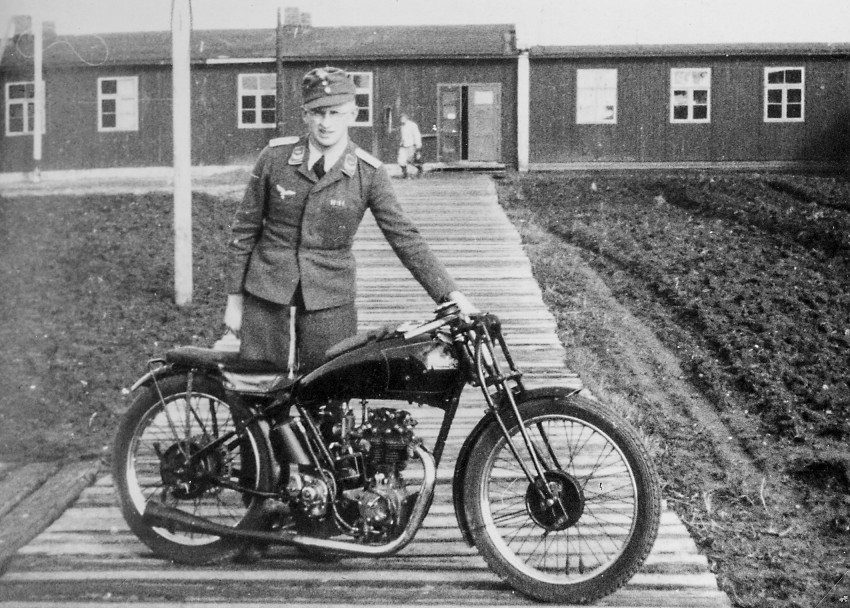
My father had been infected with the “motorcycle virus” since childhood, although his active racing career did not begin until after the Second World War. During the war he served as a fighter controller in the air‑signal corps of a night interception unit. In 1943 he was stationed on the island of Fehmarn in the Baltic Sea, where his duties left him with considerable free time.
At 21 years of age he dreamed of becoming a famous racer after the war. In 1938/39 he often rode his 500 cm³ Norton “International” on the road between Lambach and Wels (Upper Austria) at about 130 km/h (80 mph). Hardly any motorcycle was faster at that time. Until the day he found himself staring into the exhaust pipes of a 500 cm³ Rudge “Ulster”: despite 150 km/h (93 mph) on his speedometer, he remained second. Still, he remained a convinced Norton rider.
Already during his military training in Germany he thought about the time after the war. His Norton “Inter” no longer seemed “up‑to‑date” enough. He needed something more competitive. So he began visiting well‑known racing riders of the time, trying to persuade them to sell him one of their “fast irons”: Otto Daiker, Fritz Jerger, Paul Schaible, Erwin Aldinger and others. Without success.
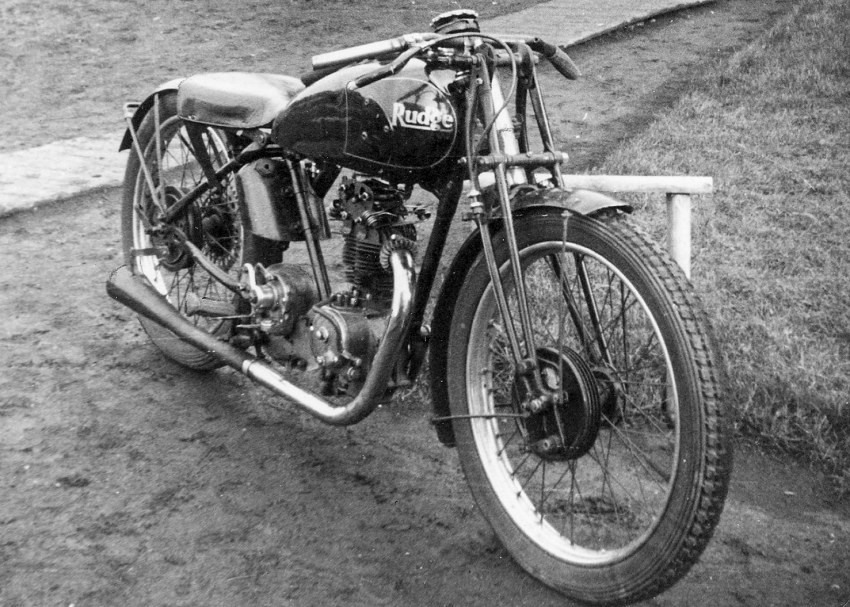
One day on Fehmarn he read in an old 1939 issue of the magazine Motorrad:
“Rare opportunity: 250 cm³ Rudge racing motorcycle, two‑valve, holder of the 5‑hour world record at
Brooklands, imported from the factory in March 1939, guaranteed over 150 km/h… Meier, Bremen.”
He was immediately enthusiastic and wrote to Mr. Meier. The reply came: yes, the motorcycle was still
available. On his next free weekend he travelled to Bremen, and negotiations began.
He could no longer remember the exact purchase price, but I found a note he had written:
“2,100 Reichsmark… 1 January 1948: 30,000 Austrian Schilling… 1 July 1948: 15,000 Austrian Schilling.”
On his next visit to Bremen he took the Rudge with him to his unit on Fehmarn, where he was greeted with a loud “hello!” by the officer responsible for motorcycles – also a motorcycle enthusiast.
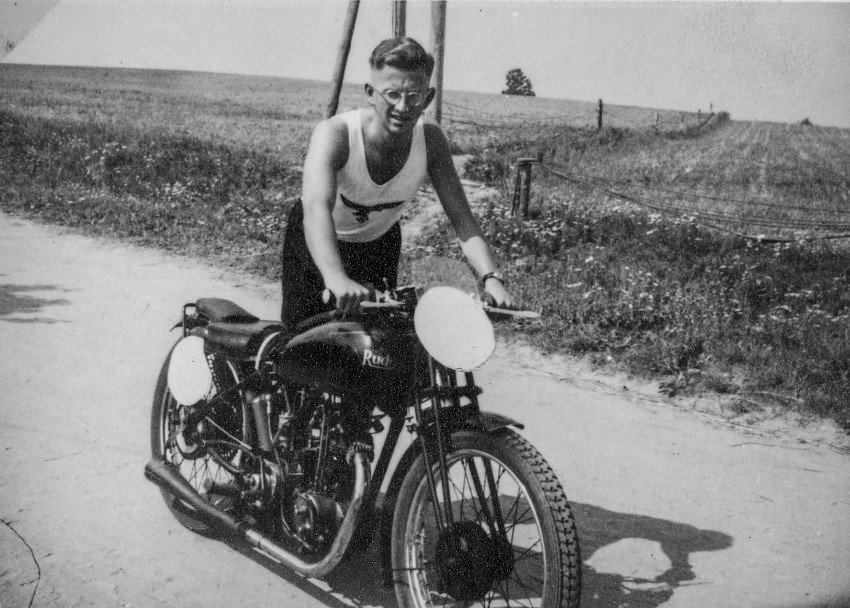
Shortly afterwards the unit was transferred to Breslau (today Wrocław, Poland). From there my father sent the Rudge home to Vöcklabruck, Upper Austria, packed in crates as freight – but only after one last “try‑out”.
During a home leave he removed the camshaft, the rocker levers and the valve tappets, packed them and brought them to a forest warden 30 km away, at a lake. Only one childhood friend knew where the parts were hidden. After an adventurous end of the war in Norway he finally returned via Bremerhaven and Passau to Vöcklabruck.
By bicycle he rode to the forest warden to retrieve the hidden parts. Soon afterwards he “banged the little motorcycle around so loudly that we had to cover our ears” (as he wrote). But to have a truly competitive machine he still needed a modern rear suspension. Before the war such systems had been produced by Josef “Peppi” Illichmann of Vienna.
During the war Illichmann had moved his workshop to Altmünster at Lake Traunsee – not far from Vöcklabruck. After overcoming a few more difficulties, “she” was finally ready for competition: equipped with an Illichmann rear suspension, racing tyres, and prepared for her first race.
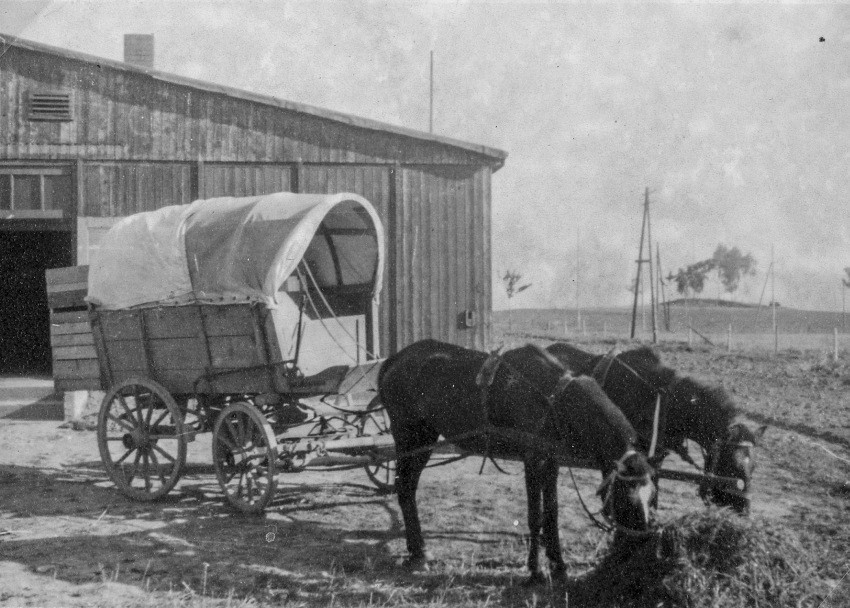
On 6 October 1946 my father finished in third place at the first post‑war road race in Salzburg‑Nonntal. In 1949 he sold the Rudge to a German buyer – and was cheated out of part of the payment. Such were the times.
He never saw the motorcycle again. His Rudge 250 cm³ two‑valve Brooklands machine disappeared without a trace. But he later managed to acquire another TT Replica, which is still in our family today.