Short descriptions of vintage motorcycles – Harley‑Davidson to Laurin & Klement
Harley‑Davidson
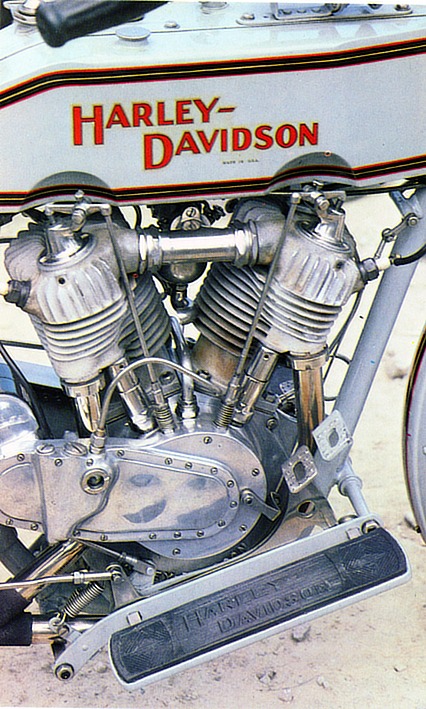
1901, United States. Two friends, William Harley, a technical draftsman, and Arthur Davidson, a toolmaker, began searching for an easier way to get around. Their solution was the founding of a small workshop in 1903 in a 3 × 4 metre shed in the Davidson family’s backyard in Milwaukee, Wisconsin. Their first motorcycle featured a 410 cm³ four‑stroke engine producing 3 hp. Production grew rapidly: 50 motorcycles in 1905, 1,150 in 1909, and 5,625 in 1911.
By 1915 Harley‑Davidson was producing V‑twin racing models with OHV eight‑valve engines, which achieved great success in Europe after the First World War. The factory won four world championship titles in road racing with Italian rider Walter Villa: three times in the 250 cm³ class (1974, 1975, 1976) and once in the 350 cm³ class (1976). In 1970 Cal Rayborn broke the 400 km/h barrier with his streamlined “cigar” record bike, powered by a 1,500 cm³ Harley‑Davidson engine, reaching 427 km/h — a record that stood for four years.
Hercules
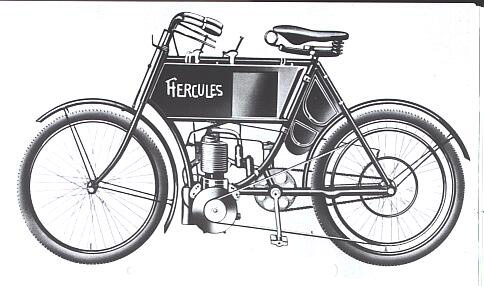
1886, Germany. One of the leading two‑wheel manufacturers of the late 20th century, producing 125,000 motorised vehicles and 200,000 bicycles annually. Founded by Carl Marschütz in Burghaslach near Nuremberg, Hercules began with bicycles, expanded to tricycles in 1894, and in 1898 built its first four‑wheeled vehicle, the “Electrochaise”.
After the First World War Hercules cooperated closely with Fichtel & Sachs. JAP‑engined 248 cm³ and 498 cm³ OHV Hercules racing machines, mainly ridden by Hans Kahrmann, won many races in the early 1930s, while Charlie Geffers was the leading Hercules trials rider for many years. In 1972 Hercules introduced the W2000, the world’s first commercially produced Wankel‑engined motorcycle, a single‑disc rotary engine with 294 cm³ and a top speed of 87.5 mph.
Honda

1948, Japan. Soichiro Honda began producing mopeds in 1947, followed in 1949 by his first motorcycle. Today Honda Motor Co. Ltd. is the largest motorcycle manufacturer in the world.
In 1960 Honda entered European racing with great success. Legendary riders such as Jim Redman, Mike Hailwood, Bob McIntyre, John Hartle and Luigi Taveri brought the brand numerous world championship titles.
Horex
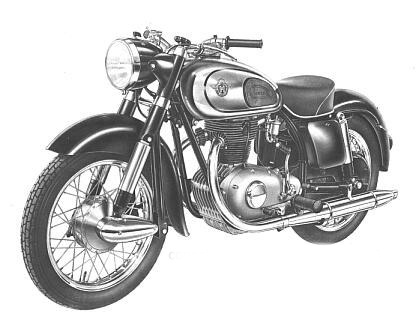
1923, Germany. Founded in Bad Homburg, Horex became known for its robust single‑ and twin‑cylinder motorcycles. The name derives from HOmburg and REX, the name of the family’s preserving‑jar factory.
Husqvarna
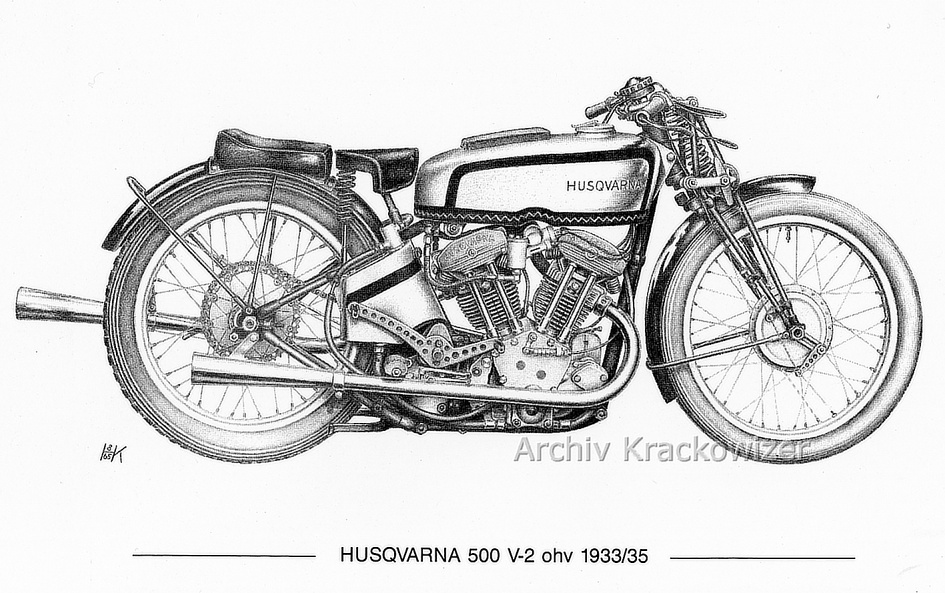
1903, Sweden. The oldest Swedish motorcycle manufacturer entered Grand Prix racing in 1930 with a 500 cm³ V‑twin OHV model. Gunnar Kalén won the 1933 European Championship with this machine. The last major GP victory came in 1935 when Ragnar Sunnqvist won at the Berlin AVUS circuit with an average speed of 171.2 km/h.
Indian
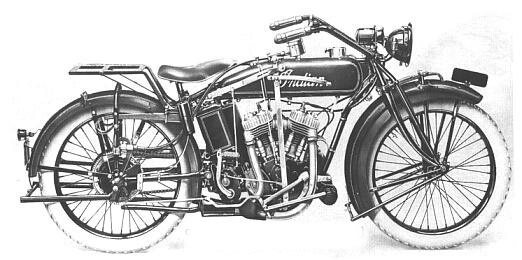
1901, United States. One of the oldest and most iconic American motorcycle manufacturers, famous for its V‑twin engines and early racing successes.
JAWA
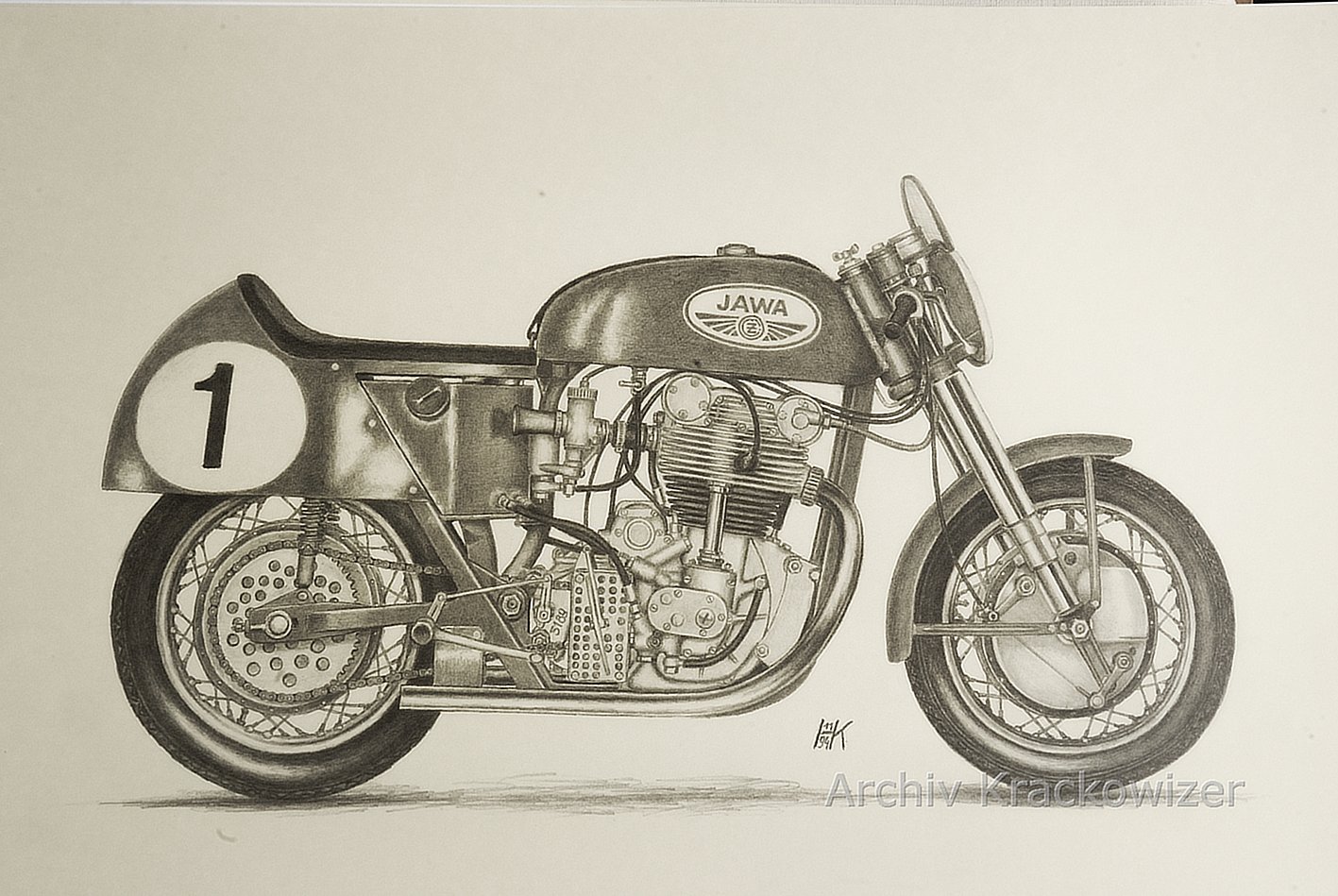
1929, Czechoslovakia. Founded by engineer František Janeček, who combined his initials “JA” with “WA” from the Wanderer motorcycle he initially built under licence.
KTM
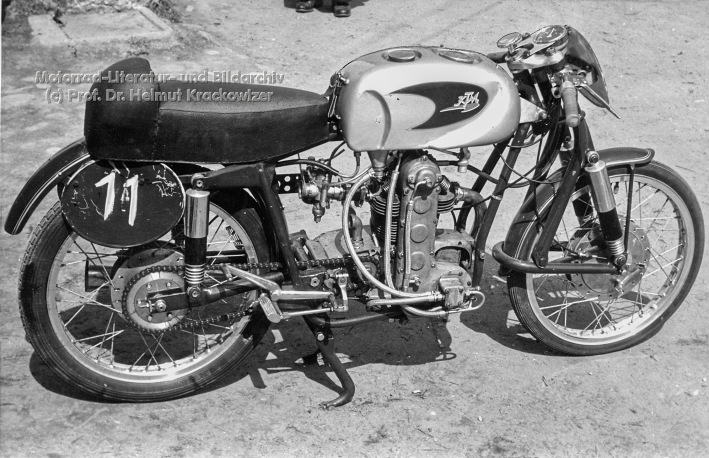
1953, Austria. In 1934 Hans Trunkenpolz founded a metalworking shop in Mattighofen, Upper Austria. By 1937 he was selling DKW motorcycles and from 1938 Opel cars.
After the Second World War he developed his own motorcycle. In 1953 the first prototype appeared: the “Moser KTM 100”, powered by a 98 cm³ Sachs engine. The name “KTM” originally stood for Kraftfahrzeuge Trunkenpolz Mattighofen. After Ernst Kronreif joined in 1955, it became Kronreif Trunkenpolz Mattighofen.
Models such as the “Tarzan”, the legendary “Ponny II” and the “Comet” followed. Since 1965 KTM has been active in motocross, achieving major international success.
Laurin & Klement
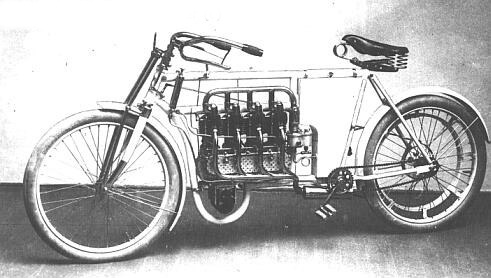
1896, Czechoslovakia (then Austria‑Hungary). In Jungbunzlau (today Mladá Boleslav), bookseller Wenzel Klement and mechanic Wenzel Laurin founded one of the pioneering motorcycle factories in Central Europe.
By 1902 and 1903 they were already winning numerous races. In 1907 the company employed 495 workers and produced around 3,000 motorcycles.